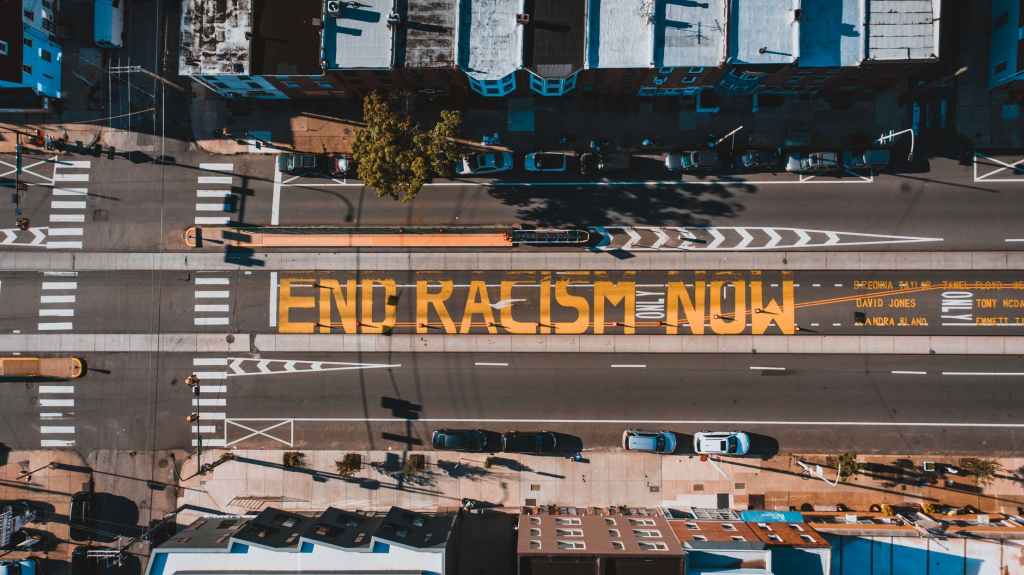
Let me start with this caveat: I mean no disrespect to the impossible work the mothers of black sons and daughters must do in order to raise their children safely and happily in today’s world. I can’t imagine how I would explain to my son that the world will look at him with suspicion for no reason other than the color of his skin. If my children had black skin, it would break my heart to explain to either of them why the world treated them differently. Instead of my daughter coming home from preschool one day bubbling over with excitement of the news that her friend “Rihanna’s skin is chocolate brown and my skin is pinky-pinky-tan!”, my son might come home surprised and saddened to learn that his skin color had a connotation that didn’t feel right to him. I am grateful that I don’t need to remind my son to keep his hands “in plain sight” if he ever gets pulled over while driving, or to explain that he might get pulled over while driving at night for no reason other than driving while black. I am relieved that I don’t have to hold my daughter tight while she sobs because she was the only kid not invited to the pool party at the mansion in Greenfield Hill, or because she is never chosen as the lead role in the ballet even though she has worked just as hard if not harder than those who do. To be honest, I don’t even know what injustices my children would suffer if black, and that itself is a privilege I am both grateful for and ashamed of.
White privilege is something I’ve struggled with even when simultaneously feeling like the world owed me something (as in, through most of my 20s). Heteronormative privilege (awarded on the basis of being married to a cis-gendered white man with two cis-gendered–as far as we know right now–children) was something I was ashamed to claim. So when I started to see my ten-year-old son exhibiting signs of being an Entitled White Male, I panicked. I’m aware that as my baby boy I treat this kid differently than I treat my other two children. While I expect my daughters to be responsible for themselves (even at four and definitely at thirteen), I take care of things for my son so that he doesn’t have to. I don’t know why–I’m not the kind of mother who caters to her children. I don’t take special requests at dinner time (you eat what I cooked and if you complain you go to bed hungry), I don’t stop what I’m doing to meet my children’s every need, and I don’t believe that “mother” is another word for “indentured slave to the family.” Yet somehow I find myself going the extra mile for my son, even if it means stopping short for my daughters. What the fuck is that about?
Many women will admit that being married to a grown-ass man whose mother did everything for him and required nothing of him is not much fun. I vowed to raise a son who would treat his wife like a Queen, who would change diapers and cook and do laundry and remember not only to put the toilet seat down but to replace the toilet paper roll. Although I wanted to raise my kids without gender bias (if my daughter can choose to pierce her ears once she reaches a responsible age, then so could my son; if my son wants to play competitive sports, then so could my daughter; if my daughter is required to play an instrument, then so is my son), it seems as though I am inadvertently through my actions still teaching biased lessons about the way the world responds to men and women.
So it seems there are important lessons that mothers of white sons need to be teaching them. We need to find ways to teach our sons how to listen rather than mansplain, to be part of the solution to end racism and gender bias, and to step aside sometimes and let others have the first slice of cake. Most importantly, I want my son to grow up understanding that while there is injustice in the world, the injustices he occasionally feels so deeply as a privileged white male are only a fraction of the injustice that others must bear daily. And if he is to demand justice for himself, he better also step outside of himself to consider what role he can play in rendering other wrongs right for those who may not have the power to right them for themselves.
 (mostly) full disclosure