Throughout my life, there were times when I was told I was “too much” or I felt like I was too much: I was too loud, too sarcastic, too energetic, had too much hair, did too many things, had too many friends, ate too much, snorted when I laughed, and otherwise made my presence known loudly and clearly and unapologetically.
Or so it seemed. Inside, I could be painfully insecure. I played (almost) every conversation and interaction I’d had each day over and over in my head, wondering where (if anywhere) I might have been offensive or off-putting. I thought I was a good communicator who was transparent and honest (to a fault), but others never seemed to understand me. I could see the reaction people had to me and I wondered whether they actually liked me or just tolerated me. Although I seemed to have a lot of friends, I never felt like I had a “best” friend, one who “got me,” who called me first, who always wanted me around, who missed me when I was gone, one who could allow me to process my swirling thoughts out loud and who also trusted me with their deepest, darkest secrets.
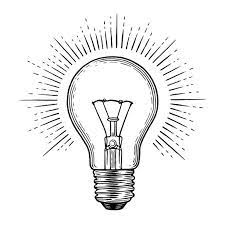
On my best days, I felt like a beacon: my exuberance and excitement to experience things led the way for others who were more cautious or hesitant. When my light bulb was on, it glowed brightly enough to light the darkest rooms my friends could sometimes get lost in. I seemed to attract (or seek out) people with depression and anxiety–they were drawn to me like moths to a flame or I collected them like the cicadas and butterflies my youngest daughter loves to find in our backyard.
On my worst days, I shrunk inside myself. Although the thoughts running through my head drowned out everything and everyone around me, I kept quiet. I hid behind my (too much) hair. I read (too many) books. I wrote (too much) in my journal. And wrote and wrote and wrote. I ranted on paper because I was afraid my burden would be too much for the people I considered friends. I confided in my swim coach, bless his heart, more often than I completed workouts. I couldn’t share how I was feeling with my mother because she would tell me I had nothing to complain about, so I unloaded on my godmother, who was always willing to listen without judgment and (almost) only gave advice when I asked for it.
For most of my life, this was a perplexing conundrum for me: why would I, an extroverted (introverted) thrill-seeker befriend anxious, introverted, distracted, and often-depressed folk? It wasn’t until I was much older (yesterday, even) that I started to understand my dark side. My light drew people to me, but it was the soft dark quicksand in the shadows that kept them close. For a while, I believed people couldn’t run away from me because it was the quicksand that kept sucking them in, rather than they were happy to sit in the muck with me. In my family, depression was a myth and anger was the only catalyst. While I kept the darkness out by immersing myself in social and physical activity, fighting to stay alive and stoking the fire to keep it from going out, others were not able to find the kindling needed to keep their fire burning consistently. I was happy to share the warmth of the fire I burned (too brightly).
Everyone (except the professionals, that is) has offered a diagnosis or label to explain me to myself: I’m just an Aries with my moon in Gemini. I could have bipolar depression. I have ADHD. I’m probably a narcissist. I can be self-centered. I’m also probably manic. I’m processing generational trauma. I am hung up on my divorce (for the last nine years). I’m frustrated with my relationship (of the last seven years). I’m bored. I’m overstimulated. I’m afraid of being alone. I am overwhelmed by people. At times, I’m too much of all of these things. Other times, I am none of these things.
Whatever they think I am, my grandmother was the one person I suspected always knew who I was, even if we didn’t talk about it until mere years before she began her next life. I am strong, I am resilient, I am flexible, I am proud. Her favorite topic of conversation with me was “what’s next?” Did I have any news on the next step in my career? Was I going to get that Master’s degree? Was I seeing anyone special? Did I have any trips planned? Although I question myself infinitely, I know what I want from the time I have on this earth. I want to stay grateful and enthusiastic. I want to love unconditionally. I want to witness other people stepping into the fullest version of themselves, even if it means letting them step away from me. I have spent time in the dark, pondering who I am and how I show up in the world. Quiet reflection is important, but I prefer living out loud. I can often feel overshadowed by trying to follow someone else’s light, and though I struggle with choosing a direction sometimes and find myself circling back before committing to moving forward, the clearest path is visible when I am the one shining the light on it.
My grandmother lived life out loud, too. She was not one to keep her opinion to herself, much to my mother’s chagrin. She worked until she was 95 years old, lived alone for over 30 years after my grandfather passed, never entertained her many suitors but joked with every bank teller and Walgreens cashier she encountered, dressed impeccably until the day she died, traveled the world with her friends and family, and played cards with friends until 3 am until one by one, they too left this earth. She demanded a grand celebration for her birthday when she turned 90, although a lady never admits her age, and then expected even more grandiose affairs every year after that. When we celebrated her 99th year on this earth, we all believed she’d be stubborn enough to celebrate 100.
Noni would have seen the world change 100 times over this past July. Instead, today is the one year anniversary of her passing. I am pretty sure that she chose to leave when she did on purpose. She wasn’t going to shuffle her way over some arbitrary finish line; she was going to walk proudly off the course and decide when she was done on her own terms. And she did: the day she passed, she had lunch with my sister, who gave her a manicure and a hairdo refresh. She was fully dressed and in her make up, had a load of laundry running in the basement, and had finished the New York Times crossword puzzle.
When she called my sister later that day to tell her she wasn’t feeling well, we all assumed she would be fine, like she had been every other time over the last ten years. She didn’t want to call an ambulance or go to the hospital, but I think she knew this time was different and eventually she asked for an ambulance. My mother and father met her at home and followed her to the hospital; when they arrived, Noni joked with the doctors and nurses until she was settled more comfortably in bed. Not long after, she closed her eyes and was gone within an hour, much to her doctor’s shock and surprise when he returned to check on her. Later that week, when my parents and sisters were going through her things, deciding what to keep and what to let go, they happened upon a slip of paper on which she’d written an old adage, like so many other slips of paper she collected with poems and phrases and words to live by: “I want to live my life like an incandescent light bulb–burn brightly my entire life, and then one day suddenly go out.” I love that she capitalized the second part of the sentence–whether on purpose to drive home the point or not–and cannot think of a better way to describe the way she lived her 99 years on this earth. Now that her light has gone out, there’s all the more reason for me to keep mine on.

 (mostly) full disclosure